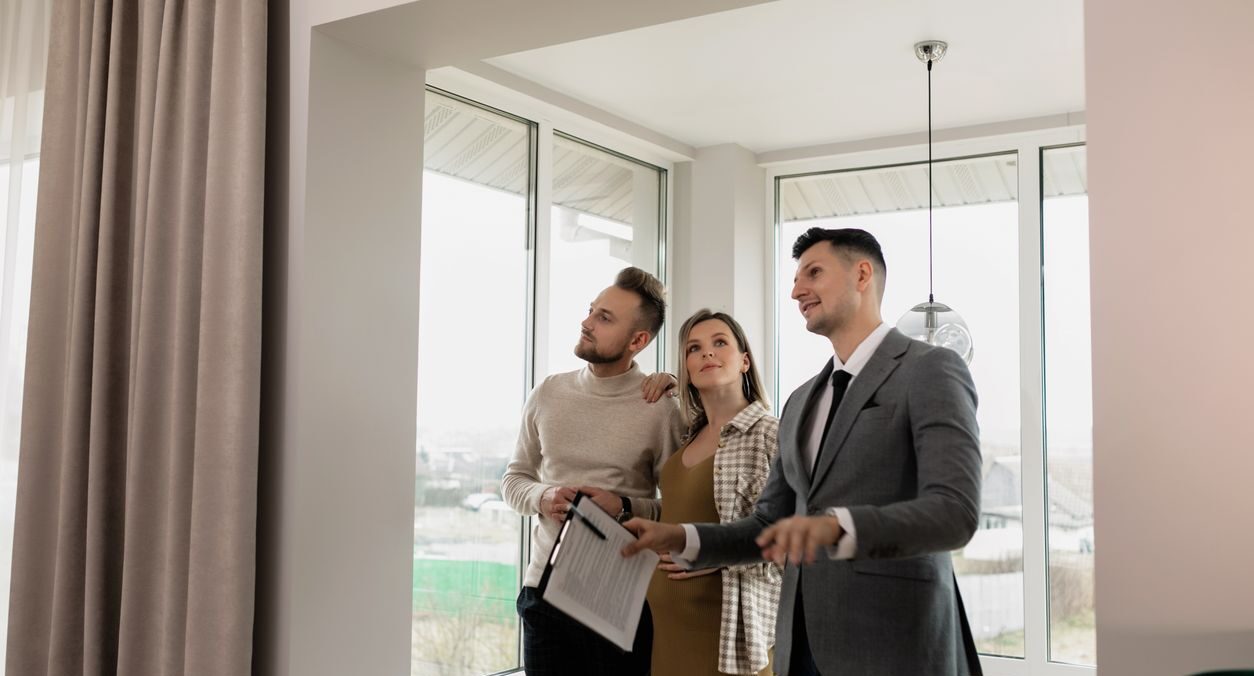

Viewing Etiquette: What Buyers Notice Instantly During a House Viewing
Buyers decide how they feel about a house far faster than they decide whether to buy it. By the time someone has crossed the hall and glanced into the first room, an impression has formed, and everything they see afterwards gets measured against it.
That is not a reason to panic. It is a reason to spend your effort where it actually counts, which is rarely where sellers expect. Here is what buyers register almost instantly, and what quietly works against you.
The first thirty seconds
The viewing starts at the kerb, not the front door. Buyers take in the state of the frontage, the paintwork, the bins, the path and the neighbours’ houses while they are still parking, and they are already adjusting their expectations.
Then comes the hall, which carries more weight than any other space in the house relative to how much time anyone spends in it. A cramped, dark, cluttered entrance sets a tone that a beautiful kitchen then has to undo. Clear the floor, take the coats down to a few, get as much light in as you can and make sure the door opens fully without catching on anything.
What buyers notice room by room
Beyond the entrance, attention concentrates in predictable places.
- Kitchens: worktop space rather than appliances. Clear surfaces read as a bigger kitchen, every time.
- Bathrooms: sealant, grout and limescale. These are read as evidence of how the whole house has been looked after.
- Bedrooms: whether a double bed genuinely fits with room to walk around it, and how much storage there is.
- Living spaces: natural light and whether the furniture suits the room or overwhelms it.
- Outside: whether the garden looks manageable, not whether it looks impressive.
Storage deserves a particular mention because sellers so often work against themselves here. Cupboards packed to the door tell a buyer the house does not have enough space, even when it does. Half-empty cupboards say the opposite.
Smell, light and warmth
The sensory things register before anyone has consciously noticed them, and they are disproportionately hard to recover from. Smell is the most powerful and the least visible to the person who lives there, because you stop noticing your own house within minutes of walking into it.
Air the place properly beforehand rather than masking anything. Heavy air fresheners and scented candles read as a cover-up, and buyers are quick to wonder what for. Open windows for an hour, deal with the bins, and if you have pets, be honest with yourself about whether a friend would notice.
Light and temperature do similar work. Every curtain and blind open, every light on regardless of the hour, and a house that is comfortably warm in winter or comfortably cool in summer. A cold house feels like an expensive house to run.
The red flags buyers spot immediately
Some things get noticed within seconds and change how a buyer reads everything else in the room.
- Damp signs: staining near skirting, bubbling paint, black spotting in corners or around window reveals.
- Fresh paint in one patch only: it draws the eye rather than hiding anything, and invites the question it was meant to prevent.
- Cracks: mostly harmless, but always noted, and worth being ready to explain calmly.
- Condensation on the windows: read immediately as failed glazing or poor ventilation.
- Deferred small repairs: a loose handle, a dripping tap, a door that will not close. Individually trivial, collectively damning.
The instinct is to conceal these. It is usually better to fix the small ones and be straightforward about the rest, because buyers who feel something has been hidden start looking for what else might be.
The mistakes sellers do not realise they are making
The most common one is being there. Buyers cannot picture themselves in a house while the owner follows them from room to room explaining it, and they will not say anything honest to their partner in front of you. Let the agent conduct the viewing and go out.
Close behind is over-personalisation. Family photographs, collections, strong colour schemes and anything that makes the house feel emphatically like someone else’s all get in the way of the mental exercise a buyer is trying to perform. You are not trying to make it look unloved, just neutral enough to be imagined differently.
And then there is over-explaining. Every house has a compromise in it, and pointing out the small bedroom before anyone has noticed simply guarantees they will.
Presenting for a strong viewing
Almost all of this is free. Clear surfaces, open curtains, fresh air, small repairs done and the owner out of the way will do more for a viewing than any amount of money spent on the things sellers usually reach for first.
Our teams run viewings across Bath and Bristol every week, and we are happy to walk round before yours start and tell you what we would change. Have a look at how we work with sellers, or get in touch for a straight opinion on your own house.